
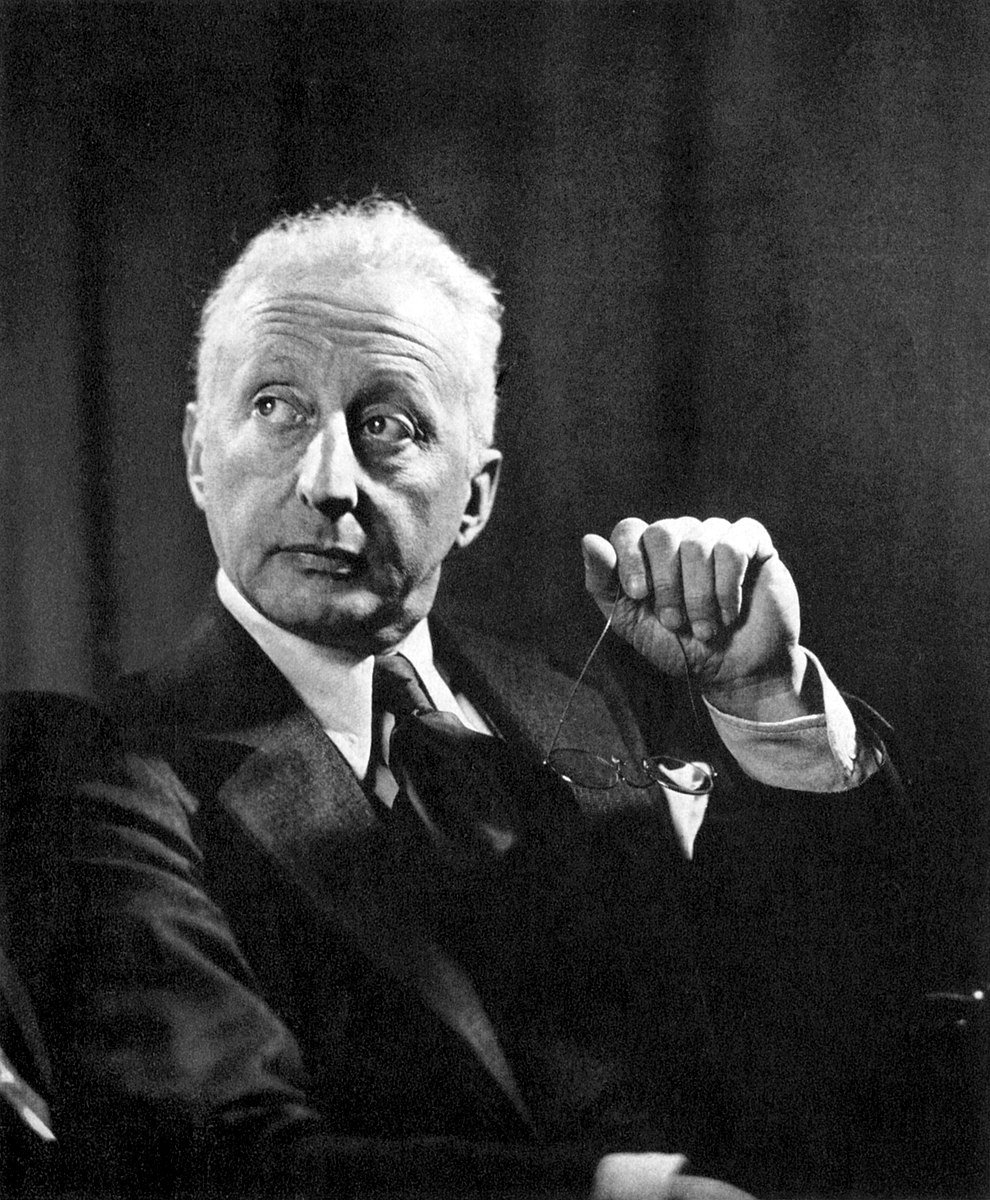
Jerome David Kern (January 27, 1885 - November 11, 1945) was an American composer of musical theatre and popular music. One of the most important American theatre composers of the early 20th century, he wrote more than 700 songs, used in over 100 stage works, including such classics as "Ol' Man River", "Can't Help Lovin' Dat Man", "A Fine Romance", "Smoke Gets in Your Eyes", "The Song Is You", "All the Things You Are", "The Way You Look Tonight" and "Long Ago (and Far Away)". He collaborated with many of the leading librettists and lyricists of his era, including George Grossmith Jr., Guy Bolton, P. G. Wodehouse, Otto Harbach, Oscar Hammerstein II, Dorothy Fields, Johnny Mercer, Ira Gershwin and Yip Harburg.
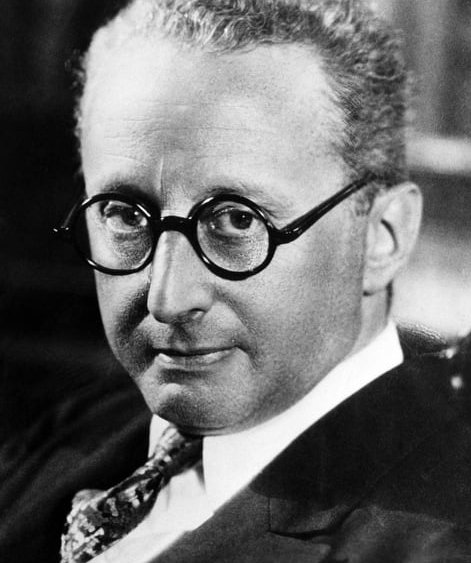
A native New Yorker, Kern created dozens of Broadway musicals and Hollywood films in a career that lasted for more than four decades. His musical innovations, such as 4/4 dance rhythms and the employment of syncopation and jazz progressions, built on, rather than rejected, earlier musical theatre tradition. He and his collaborators also employed his melodies to further the action or develop characterization to a greater extent than in the other musicals of his day, creating the model for later musicals. Although dozens of Kern's musicals and musical films were hits, only Show Boat is now regularly revived. Songs from his other shows, however, are still frequently performed and adapted. Many of Kern's songs have been adapted by jazz musicians to become standard tunes.
Kern was born in New York City, on Sutton Place, in what was then the city's brewery district. His parents were Henry Kern (1842-1908), a Jewish German immigrant, and Fannie Kern nee Kakeles (1852-1907), who was an American Jew of Bohemian parentage. At the time of Kern's birth, his father ran a livery stable; later he became a successful merchant. Kern grew up on East 56th Street in Manhattan, where he attended public schools. He showed an early aptitude for music and was taught to play the piano and organ by his mother, a professional player and teacher.
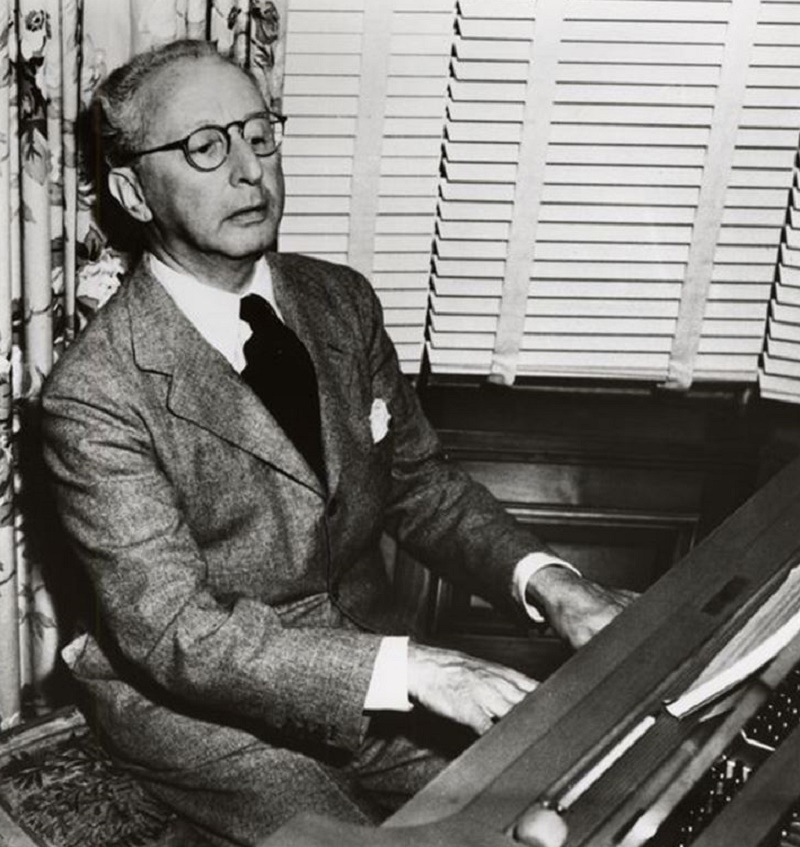
In 1897, the family moved to Newark, New Jersey, where Kern attended Newark High School (which became Barringer High School in 1907). He wrote songs for the school's first musical, a minstrel show, in 1901, and for an amateur musical adaptation of Uncle Tom's Cabin put on at the Newark Yacht Club in January 1902. Kern left high school before graduation in the spring of his senior year in 1902. In response, Kern's father insisted that his son work with him in business, instead of composing. Kern, however, failed miserably in one of his earliest tasks: he was supposed to purchase two pianos for the store, but instead he ordered 200. His father relented, and later in 1902, Kern became a student at the New York College of Music, studying the piano under Alexander Lambert and Paolo Gallico, and harmony under Dr. Austin Pierce. His first published composition, a piano piece, At the Casino, appeared in the same year. Between 1903 and 1905, he continued his musical training under private tutors in Heidelberg, Germany, returning to New York via London.
For a time, Kern worked as a rehearsal pianist in Broadway theatres and as a song-plugger for Tin Pan Alley music publishers. While in London, he secured a contract from the American impresario Charles Frohman to provide songs for interpolation in Broadway versions of London shows. He began to provide these additions in 1904 to British scores for An English Daisy, by Seymour Hicks and Walter Slaughter, and Mr. Wix of Wickham, for which he wrote most of the songs.
In 1905, Kern contributed the song "How'd you like to spoon with me?" to Ivan Caryll's hit musical The Earl and the Girl when the show transferred to Chicago and New York in 1905. He also contributed to the New York production of The Catch of the Season (1905), The Little Cherub (1906) and The Orchid (1907), among other shows. From 1905 on, he spent long periods of time in London, contributing songs to West End shows like The Beauty of Bath (1906; with lyricist P. G. Wodehouse) and making valuable contacts, including George Grossmith Jr. and Seymour Hicks, who were the first to introduce Kern's songs to the London stage. In 1909 during one of his stays in England, Kern took a boat trip on the River Thames with some friends, and when the boat stopped at Walton-on-Thames, they went to an inn called the Swan for a drink. Kern was much taken with the proprietor's daughter, Eva Leale (1891-1959), who was working behind the bar. He wooed her, and they were married at the Anglican church of St. Mary's in Walton on October 25, 1910. The couple then lived at the Swan when Kern was in England.
Kern is believed to have composed music for silent films as early as 1912, but the earliest documented film music which he is known to have written was for a twenty-part serial, Gloria's Romance in 1916. This was one of the first starring vehicles for Billie Burke, for whom Kern had earlier written the song "Mind the Paint", with lyrics by A. W. Pinero. The film is now considered lost, but Kern's music survives. Another score for the silent movies, Jubilo, followed in 1919. Kern was one of the founding members of ASCAP.
Kern and his wife, Eva, often vacationed on their yacht Show Boat. He collected rare books and enjoyed betting on horses.[54] At the time of Kern's death, Metro-Goldwyn-Mayer was filming a fictionalized version of his life, Till the Clouds Roll By, which was released in 1946 starring Robert Walker as Kern. In the film, Kern's songs are sung by Judy Garland, Kathryn Grayson, June Allyson, Lena Horne, Dinah Shore, Frank Sinatra and Angela Lansbury, among others, and Gower Champion and Cyd Charisse appear as dancers. Many of the biographical elements are fictionalized.
In the fall of 1945, Kern returned to New York City to oversee auditions for a new revival of Show Boat, and began to work on the score for what would become the musical Annie Get Your Gun, to be produced by Rodgers and Hammerstein. On November 5, 1945, at 60 years of age, he suffered a cerebral hemorrhage while walking at the corner of Park Avenue and 57th Street. Identifiable only by his ASCAP card, Kern was initially taken to the indigent ward at City Hospital, later being transferred to Doctors Hospital in Manhattan. Hammerstein was at his side when Kern's breathing stopped.
Hammerstein hummed or sang the song "I've Told Ev'ry Little Star" from Music in the Air (a personal favorite of the composer's) into Kern's ear. Receiving no response, Hammerstein realized Kern had died. Rodgers and Hammerstein then assigned the task of writing the score for Annie Get Your Gun to the veteran Broadway composer Irving Berlin.
Kern is interred at Ferncliff Cemetery in Westchester County, New York. His daughter, Elizabeth "Betty" Jane Kern (1918-1996) married Artie Shaw in 1942 and later Jack Cummings. Kern's wife eventually remarried, to a singer named George Byron.